
The Bavarian State Natural History Collections (SNSB) at the Munich Show
October 6, 2026
A unique pterosaur from the Bavarian tropics
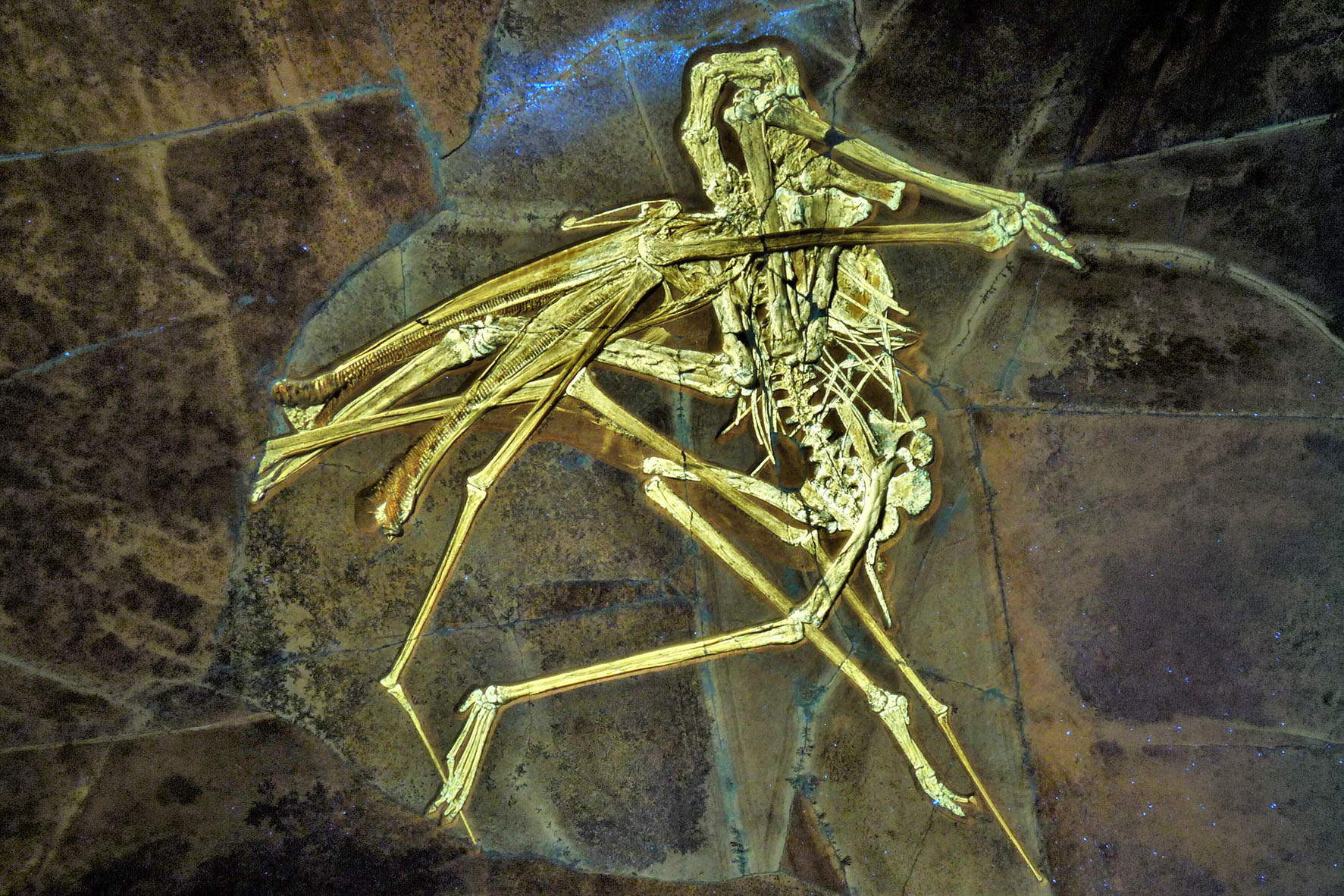
The Bavarian State Collections of Natural History (Staatliche Naturwissenschaftliche Sammlungen Bayern, SNSB) will be exhibiting at this year’s Munich Show. Their 34 million specimens help researchers better understand the interrelationships and processes in nature. This year, a particularly spectacular fossil from the SNSB Natural History Museum in Bamberg has made its way to the Munich Show: At booth B1.p38 in Hall B1, you can see the original specimen of the pterosaur Balaenognathus maeuseri from the Wattendorf fossil site in Franconia.
During the Late Jurassic period, about 154 million years ago, sea levels were significantly higher than they are today. The climate was tropical; Central Europe was largely covered by a shallow shelf sea from which a few islands protruded. Wattendorf was located near one of these islands, though it was submerged and about 1,500 km farther south than it is today. A wide variety of creatures lived on the beaches and in the shallow waters. Some groups, such as clams, sea urchins, and fish, still exist today. Others, such as the pterosaur Balaenognathus maeuseri, have long been extinct; they are unfamiliar to us but particularly relevant for reconstructing and understanding Jurassic ecosystems.
Since 2004, the team from the Bamberg Natural History Museum has been excavating at the nearby Upper Jurassic fossil site in Wattendorf, always on the lookout for fossils that bear witness to this era. The pterosaur discovered in 2011 differs significantly from earlier finds: Its long jaws are lined with over 480 small, hook-shaped teeth and resemble combs. The jaw curves upward like that of a sabre-billed bird. Apparently, the animal fed differently than other pterosaurs: 154 million years ago, it waded through the shallow tropical lagoon landscape of what is now the Franconian Alb, sucking in tiny shrimp and crabs and then filtering them out with its teeth. The reptile presumably used its beak to funnel water in and then squeeze it back out through its teeth, similar to modern flamingos or baleen whales.
For this reason, the pterosaur skeleton was given the genus name Balaenognathus (“whale-jaw”) in its scientific description. The pterosaur bears the species name maeuseri in honor of Dr. Matthias Mäuser, the former director of the Bamberg Museum of Natural History, who passed away in August 2021.
At Booth B1.p38 in Hall B1, visitors to the Munich Show 2026 will have the opportunity to view this unique fossil up close and learn about the latest research being conducted by the Bavarian State Collections of Natural History. Scientists will demonstrate how modern imaging methods and techniques help them better understand life on Earth, both past and present.
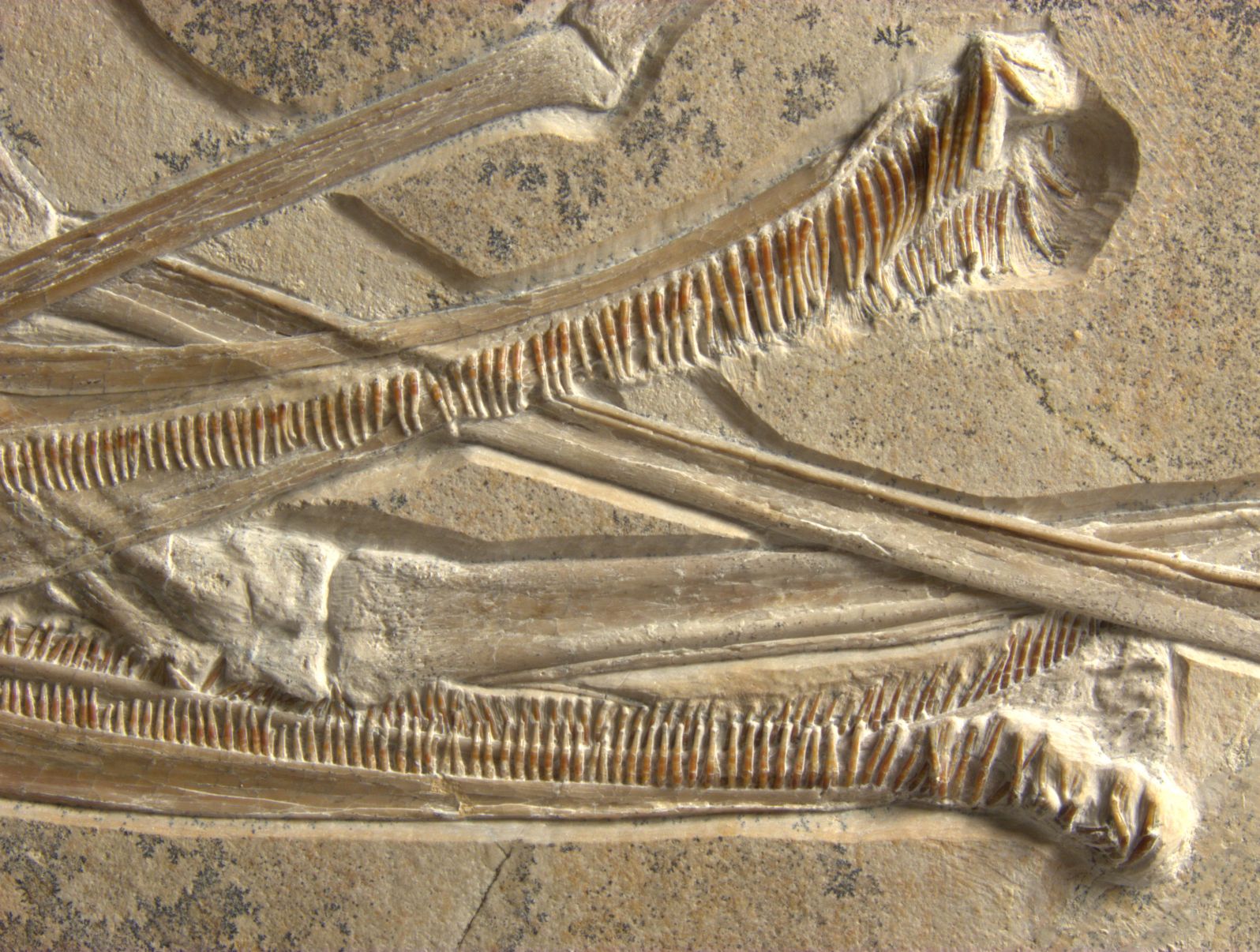
Kiefer und Zähne von Balaenognathus maeuseri in Normallicht © Helmut Tischlinge
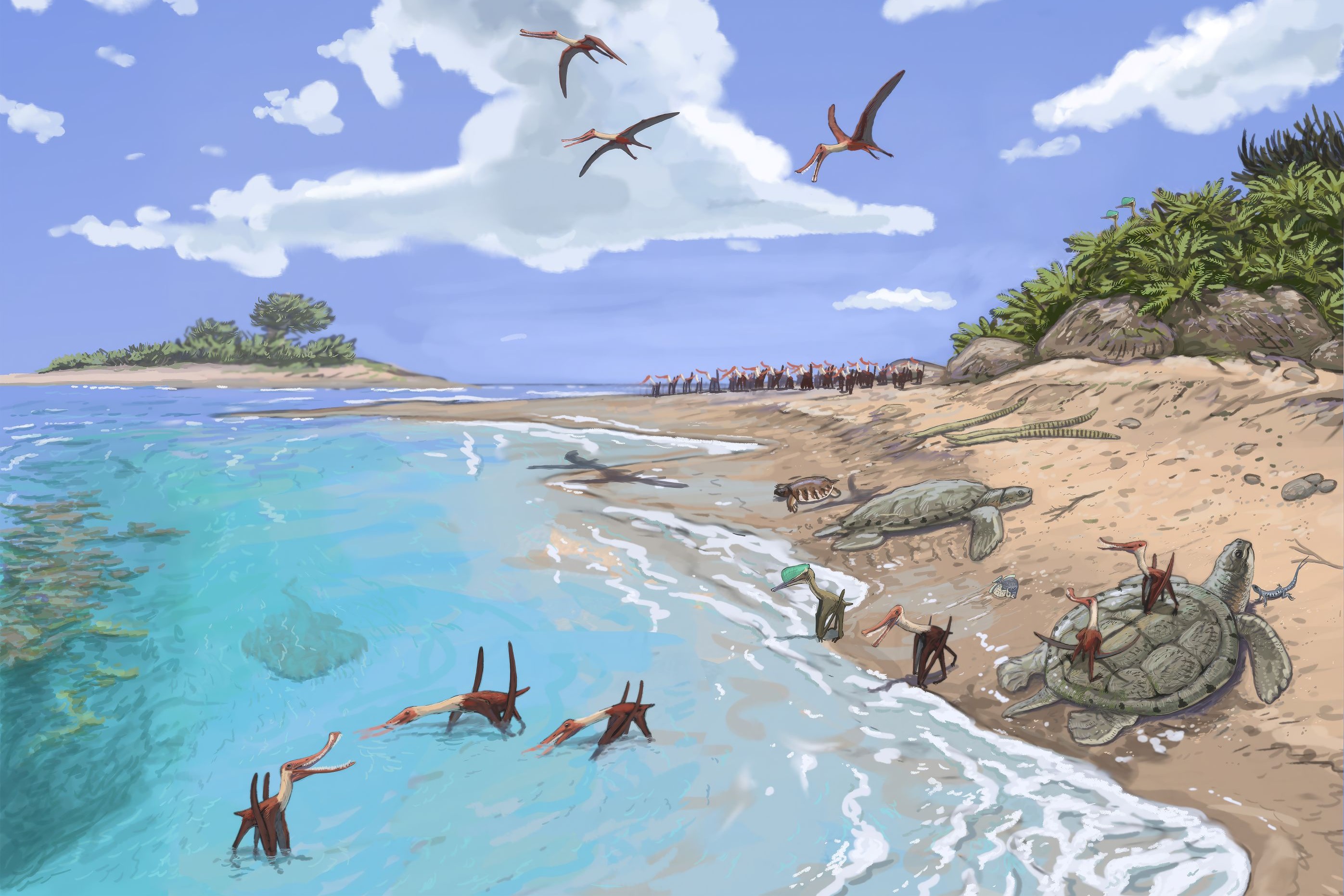
So könnte der Lebensraum des Flugsauriers und seiner Zeitgenossen rund um das fränkische Wattendorf vor rund 154 Millionen Jahren ausgesehen haben. © Joschua Knüppe (Ausschnitt)
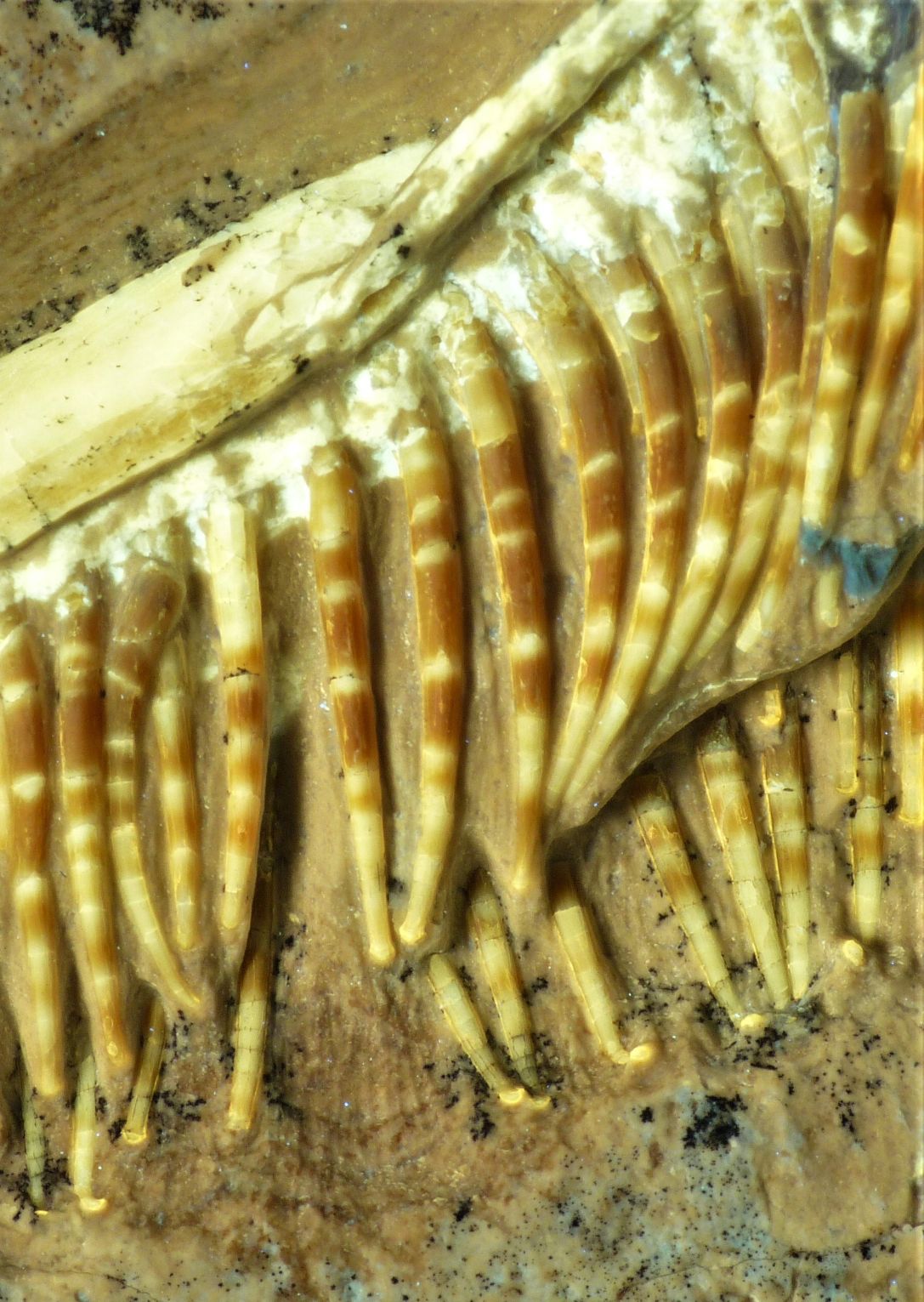
Zähne von Balaenognathus maeuseri unter UV-Licht © Helmut Tischlinger